




Ask For A Quick Quote
We will contact you within one working day. Please pay attention to your email.
Request a Sample
With the mission of “Smart Manufacturing - Global Delivery”, we help our customers shorten the time-to-market and optimize the supply chain cost through continuous technology iteration and digital upgrading. We look forward to working with you to define the future of electronic manufacturing!
- Technology Driven Intelligent Manufacturing
- Full-process quality control
- In-depth industry experience
- Agile Service Network
Enhancing Elevator Control PCB Assembly: Key Considerations and Insights
2026-07-10
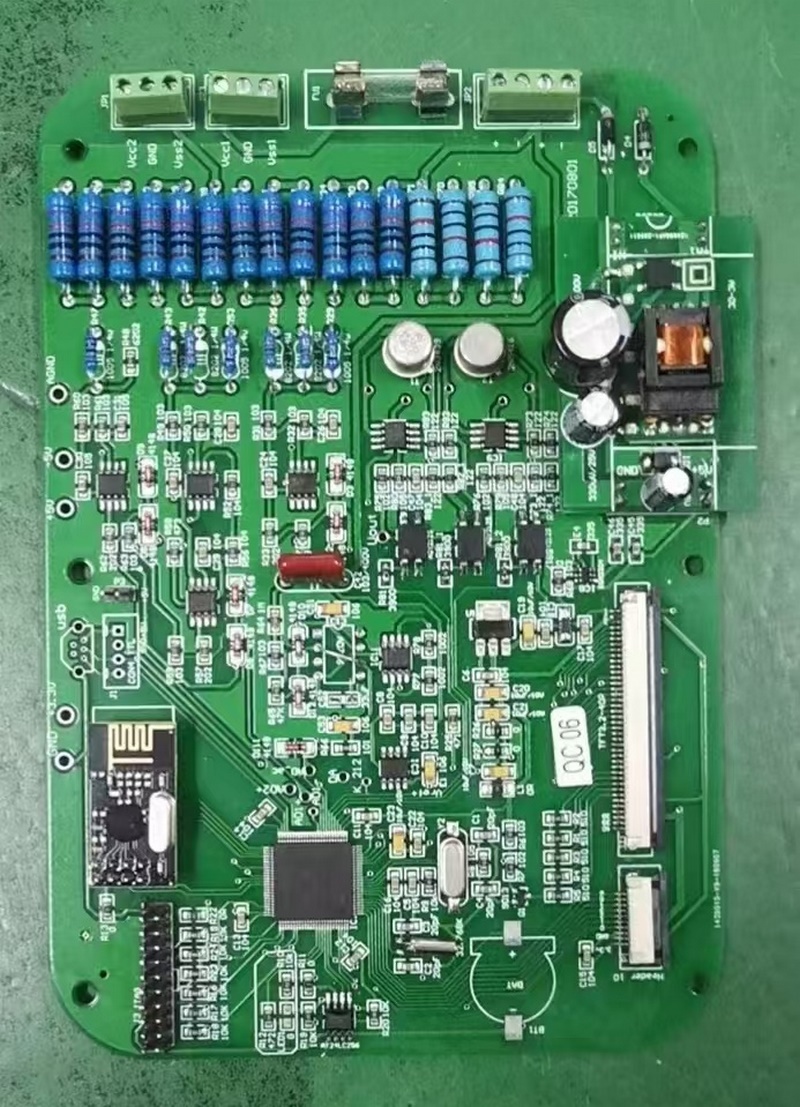
Elevator Control PCB Assembly plays a crucial role in modern elevator systems, serving as the brain that manages operations, safety, and communication between various components. For professionals in the electronic components sector, understanding the technical nuances of PCB assembly for elevator control systems is essential for ensuring optimal performance and reliability.
One of the primary considerations when designing an Elevator Control PCB is the selection of the appropriate materials. High-quality substrates that can withstand varying temperatures and environmental conditions are vital for long-term durability. Materials such as FR-4 (flame-retardant) are commonly used due to their excellent thermal properties and dielectric strength. Additionally, the choice of copper thickness impacts the board's current-carrying capacity and thermal dissipation, crucial for high-load elevator applications.
Next, the design layout is critical in ensuring the functionality and efficiency of the Elevator Control PCB Assembly. Proper component placement minimizes signal interference and enhances electromagnetic compatibility (EMC). It's advisable to keep high-frequency components away from sensitive areas to reduce noise and improve performance. Additionally, employing ground planes can help in noise reduction and improve signal integrity, leading to a more reliable control system.
Another significant factor is the soldering process. The techniques employed in soldering components to the PCB affect both the performance and longevity of the assembly. Surface-mount technology (SMT) is favored for its efficiency and space-saving advantages, enabling the integration of a larger number of components on a smaller footprint. However, ensuring the right soldering temperature and time is crucial to avoid thermal damage or cold solder joints that could lead to malfunctions.
Testing and validation procedures for Elevator Control PCB Assembly are equally important. Rigorous testing protocols, including functional testing, thermal cycling, and vibration tests, ensure that the system can withstand the operational environment of an elevator. These tests help identify potential weaknesses and allow for design adjustments before mass production, ultimately leading to a more reliable product.
In conclusion, professionals tasked with Elevator Control PCB Assembly should focus on material selection, design layout, soldering techniques, and comprehensive testing. By paying close attention to these details, one can significantly improve the performance and reliability of elevator control systems, thereby enhancing overall customer satisfaction and operational efficiency in the electronic components industry. By continually staying informed about industry advancements and best practices, professionals can ensure their PCB assemblies remain at the forefront of technology.
One of the primary considerations when designing an Elevator Control PCB is the selection of the appropriate materials. High-quality substrates that can withstand varying temperatures and environmental conditions are vital for long-term durability. Materials such as FR-4 (flame-retardant) are commonly used due to their excellent thermal properties and dielectric strength. Additionally, the choice of copper thickness impacts the board's current-carrying capacity and thermal dissipation, crucial for high-load elevator applications.
Next, the design layout is critical in ensuring the functionality and efficiency of the Elevator Control PCB Assembly. Proper component placement minimizes signal interference and enhances electromagnetic compatibility (EMC). It's advisable to keep high-frequency components away from sensitive areas to reduce noise and improve performance. Additionally, employing ground planes can help in noise reduction and improve signal integrity, leading to a more reliable control system.
Another significant factor is the soldering process. The techniques employed in soldering components to the PCB affect both the performance and longevity of the assembly. Surface-mount technology (SMT) is favored for its efficiency and space-saving advantages, enabling the integration of a larger number of components on a smaller footprint. However, ensuring the right soldering temperature and time is crucial to avoid thermal damage or cold solder joints that could lead to malfunctions.
Testing and validation procedures for Elevator Control PCB Assembly are equally important. Rigorous testing protocols, including functional testing, thermal cycling, and vibration tests, ensure that the system can withstand the operational environment of an elevator. These tests help identify potential weaknesses and allow for design adjustments before mass production, ultimately leading to a more reliable product.
In conclusion, professionals tasked with Elevator Control PCB Assembly should focus on material selection, design layout, soldering techniques, and comprehensive testing. By paying close attention to these details, one can significantly improve the performance and reliability of elevator control systems, thereby enhancing overall customer satisfaction and operational efficiency in the electronic components industry. By continually staying informed about industry advancements and best practices, professionals can ensure their PCB assemblies remain at the forefront of technology.
Related news
Request A Quote
Please feel free to contact us at any time, and we will wholeheartedly provide you with the highest quality service and support.